Enaex's international rise expands operations in South Africa and begins its landing in India
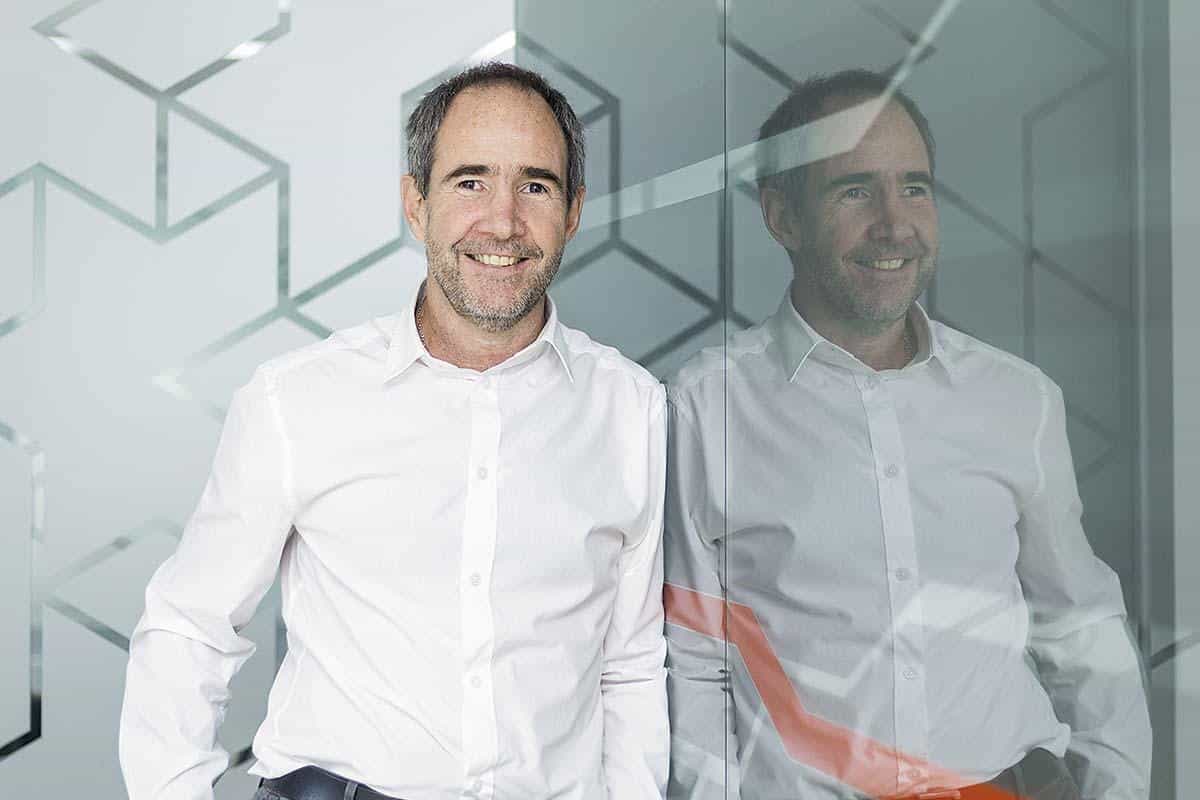
Following the joint venture agreed with the N.A.N. GreenMet conglomerate, the company is fine-tuning its local executive team in the Asian giant, commercial operations in 2027 and the first steps toward a future plant. The company’s CEO, Juan Andrés Errázuriz, anticipates that “over the next three years we are going to increase the pace of investment to sustain our growth.”
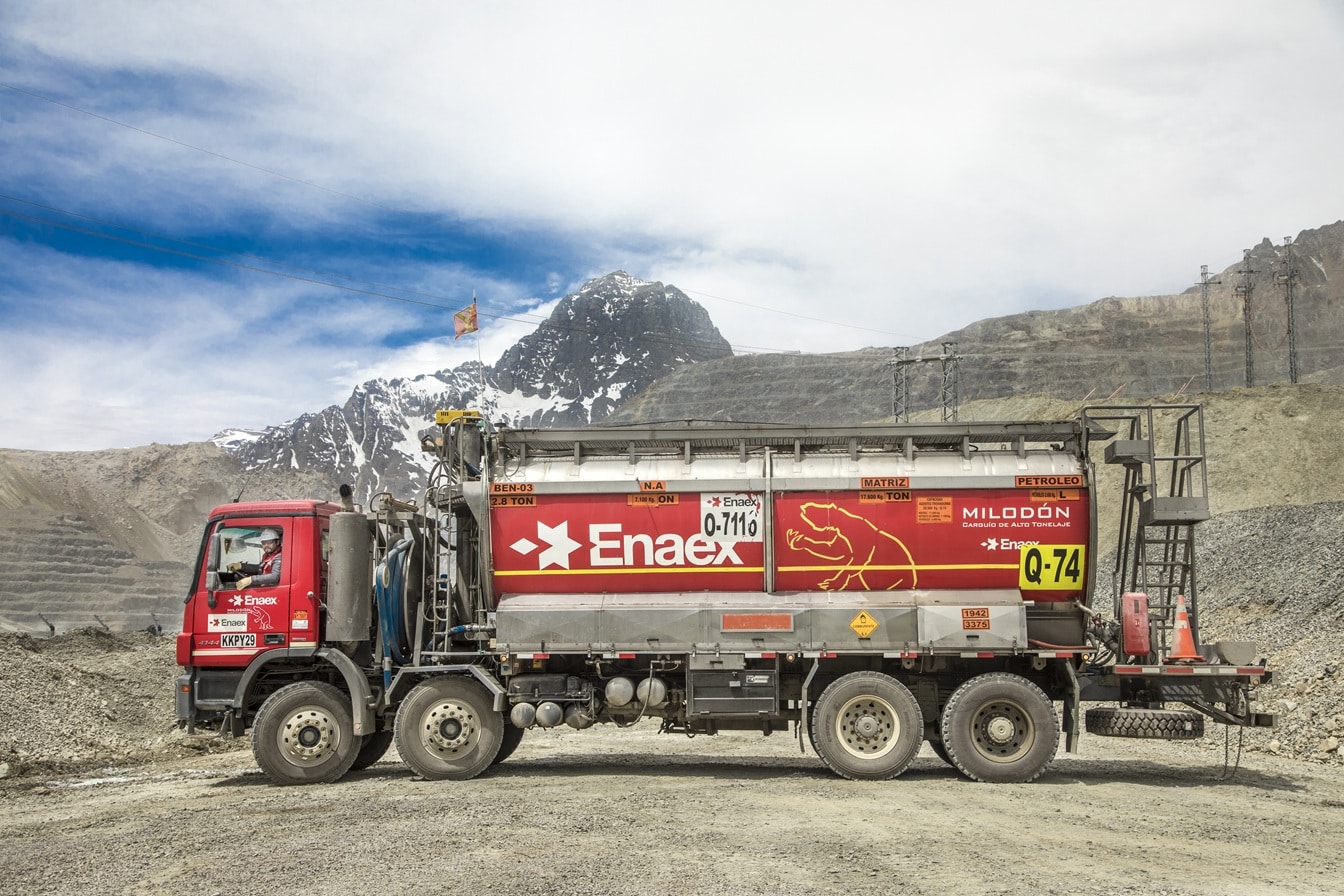
Among the consequences of the global mining boom is the expansion of the ecosystem of associated industries, in which Enaex’s sustained growth stands out. With a presence across the entire value chain of explosives production and mining services – from the production of explosive raw materials to blasting – the Sigdo Koppers group subsidiary surpassed the US$ 2 billion mark last year, doubling in just four years the consolidated revenues of US$ 1.285 billion recorded at the end of 2021.
An exponential development whose engine has been its rapid internationalization. After consolidating itself in the first decade of this century as Chile’s most important supplier, based on assets such as its world-class plant in Mejillones, the journey beyond Chile’s borders began in 2015 in Brazil with the takeover of the largest explosives manufacturer (IBQ) and the acquisition in France of the world leader in detonators (Davey Bickford).
In 2019, it closed the purchase of Sasol’s Explosives Division in South Africa, an operation that moved into the production phase the following year, the same year in which it entered Australia and then structured the integration of its subsidiary Downer Blasting Services. As a result of its presence in the most relevant mining regions – with direct operations in Argentina, the US, Peru and Mexico, along with exports to more than 40 countries – foreign sales matched those generated in Chile in 2022 and have continued to rise, accounting for 64% of revenues at the end of last year.
We have evolved from a local company into an international one, constantly changing the balance of our activity, trying to give the maximum autonomy to the different regions while seeking operational synergies in a more centralized way.
This is how Enaex CEO Juan Andrés Errázuriz described the direction of the firm, which surpassed 8,200 employees last year.
The expansion beyond borders is far from over. This month, Enaex began a new chapter in South Africa and in its relationship with Sasol by signing the purchase of the latter’s nitrates business, which includes the main ammonia conversion plants for the fertilizer and explosives markets.
From now on, Enaex Africa and Sasol – which will retain a 23% stake in the joint firm – will work in “close collaboration to ensure a smooth transition for employees, customers, suppliers and other stakeholders.”
Another transcendental step in this strategy took place three months earlier, when Enaex announced the signing of a joint venture with N.A.N. GreenMet – linked to the Vedanta Group, one of the largest conglomerates with a presence in mining (non-ferrous metals and critical minerals), oil, gas and energy – to develop an explosives company from scratch, focused on the development of emulsions, detonators and advanced blasting solutions. “We entered into this joint venture because we see very significant growth potential,” said Errázuriz about the announcement, made official on June 30, to enter an explosives market twice the size of Chile’s.
Under the agreement that gave shape to the N.A.N.–Enaex firm, “we contribute the know-how and people with specific knowledge of the business, plus an entrepreneurial culture developed by going into different markets,” he explained, while its Indian counterpart contributes its knowledge of “the local culture – probably more hierarchical than Western culture, where having a partner who understands the ways of doing business is very important – and the ability to engage with the authorities and local legislation on matters such as purchasing land to build the plants.”
The new company was formed with equivalent stakes, although with 50.01% ownership in the hands of Enaex, and has already set up a preliminary six-member board – three from each side – which will address the formation of the management team. The Chilean side has the prerogative to propose the CEO and the operations manager, and N.A.N. the finance and human resources executives. “There have already been two people from Enaex there for a few weeks, and they will be there for a long time. We are in the phase of deciding the optimal location to build the plant to serve end customers and optimize the supply of raw materials. We expect to define it by the end of the year, so that next year we can begin with the land purchase and construction,” Errázuriz detailed.
The next tasks on the horizon, he added, will be to define the investments and their financing formulas, via a capital increase or potential debt mechanisms.
What is the strategy for the near future in India?
Since we are not buying a company but starting from scratch, the plan in India is first to build production units, so the operation will probably start, ideally, around 2028, as our partner is convinced that we can move very quickly. Before that, we want to start importing products to launch our commercial operation in 2027, so we can take a leap once we have production capacity. We are entering to address all segments of the civil explosives business as a supplier with world-class quality and safety standards.
Where we have the greatest potential to enter first is the mining segment, and that will also enable us to enter others such as quarries or construction.
What are the starting points of the strategy in that market?
The starting point is to build production capacity. The initial commitment is to invest in an emulsion plant to manufacture explosives – using nitrate purchased from third parties, as we do not have our own – and also a plant to assemble detonators. We will also need to invest in a fleet of mobile manufacturing units for loading explosives at the mines.
Where is the plan headed in the short and medium term?
In that market there are three large segments: traditional large-scale mining – which represents about 30% of the market, with demand from customers seeking suppliers with international standards in safety and product quality; quarries, basically to obtain rock for concrete; and civil works with higher-precision projects such as tunnels and dams.
How will you accompany the Vedanta Group’s operations?
They are very strong in zinc mining, where they are number one, and the scope of the agreement covers both India and the subcontinent, which includes seven countries. But the first stage is to build manufacturing capacity in India and then address neighboring markets.
What contribution do you expect this operation to make to the company’s global activity?
We would like it to represent at least 10% of our sales in the medium term. Before that, we have to build the plant and begin penetrating the market. Over a five-year period, we expect it to be as relevant as what we have in Brazil, South Africa or Australia. It will be somewhat slower, because in those countries we bought an operation that was already running.
What is the goal of continuing to grow in South Africa, where you already have a significant presence as one of the three most relevant players?
Today Africa is extremely important to our results, sales and technological development. We have grown a lot in profitability, efficiency and margin improvement with higher value-added products. We have invested in new production plants to increase capacity and be more competitive. We expect significant growth, particularly because from South Africa we are addressing neighboring markets such as Namibia, Botswana and Zambia, in some of which we are starting out with local partners.
What room for development do you have in Australia, six years after entering?
Australia is home to the parent companies of two major competitors – Dyno and Orica, the largest in the world in civil explosives – which has challenged us to keep investing in innovation and technology to optimize our production processes and offer new solutions to customers. In that market we have two companies, and one of them is a leader in the manufacture of accessories, not only locally but also internationally. We see both businesses growing over the next year after making significant investments in production capacity, mobile manufacturing units and new product development.
Although the first studies for international expansion were carried out in Peru, ultimately the great milestone in the region was the entry into Brazil starting in 2012, one of your oldest international operations. What are your expectations for the future?
In Brazil we have made investments that have allowed us to be very well positioned in the market, and we expect to continue having sustained growth in the coming years. In the case of Peru, it was harder for us, but after many years we finally managed to grow. In this way, we have consolidated ourselves as the most important player in South America today.
You are also present with a smaller-scale operation in Argentina, which, although it has had an underdeveloped mining sector until now, has sparked a strong wave of investment projects. What opportunities do you see in that market?
We have been in Argentina since 2009 and throughout this period we have been, on average, the second player, but it is a very small market. If the project pipeline really materializes, growth in the explosives and mining supplier market over the next five years will be very attractive. Regardless of political processes, there are structural reasons why investors are coming, and will come, to that country, so we are quite confident. If this boom materializes, we will have to carry out expansions.
What other countries are you targeting for growth?
There is a very large market in which we are just beginning to grow, which is the United States, where we have a market share of around 1%. We have already built production capacity, and we have room and good conditions to grow.
In 2025, Enaex posted growth of 13% in consolidated revenues and 12% in EBITDA. And in the first half of this year, the increases were even greater, at 27% and 14% respectively, while maintaining the 16% increase in net income. What does this result indicate regarding expectations for this year?
It has been a very good first half, and what is interesting is that it has not been due to a one-off factor, but has occurred in all the countries where we operate and across our full range of products. We do not see specific factors that would change the trend of the first half, so we expect to end the year with a certain continuity.
What have been the most important milestones in terms of investment?
Over the last four or five years we have made investments of around US$ 90 million annually, mainly geared toward growth, expansions and new plants in the markets where we are established, or toward equipment renewal to be more efficient in production. A second component has to do with the investments necessary to maintain the current operation, for example, at our Mejillones plants. And over the next few years we will probably continue investing between US$ 90 million and US$ 100 million per year.
Enaex is a company known for its conservative financial position, but it has nonetheless been active in M&A. What has been the track record in this area and what is the outlook?
In inorganic growth, every two or three years we have made investments of around US$ 100 million. To finance them, we have used our own resources complemented by bank financing, but we have managed to keep our leverage ratio in recent years usually below two times EBITDA. Going forward, the plan is to continue with mixed growth between own resources and external financing, maintaining healthy ratios in the company. In addition, over the next few years we are interested in analyzing opportunities for some inorganic growth in markets where we are present or complementary ones.
How much will you invest in 2026?
This year we will invest slightly more than US$ 100 million.
Will you increase investment in the short and medium term?
Yes. Over the next three years we will continue and increase the pace of the investments we have made in recent years, on average. We need to make that investment to keep up the pace of growth we have had.
Interview originally published in Diario Financiero.